How the Dr. Archibald Scandal Redefined Medical Institutional Abuse Litigation
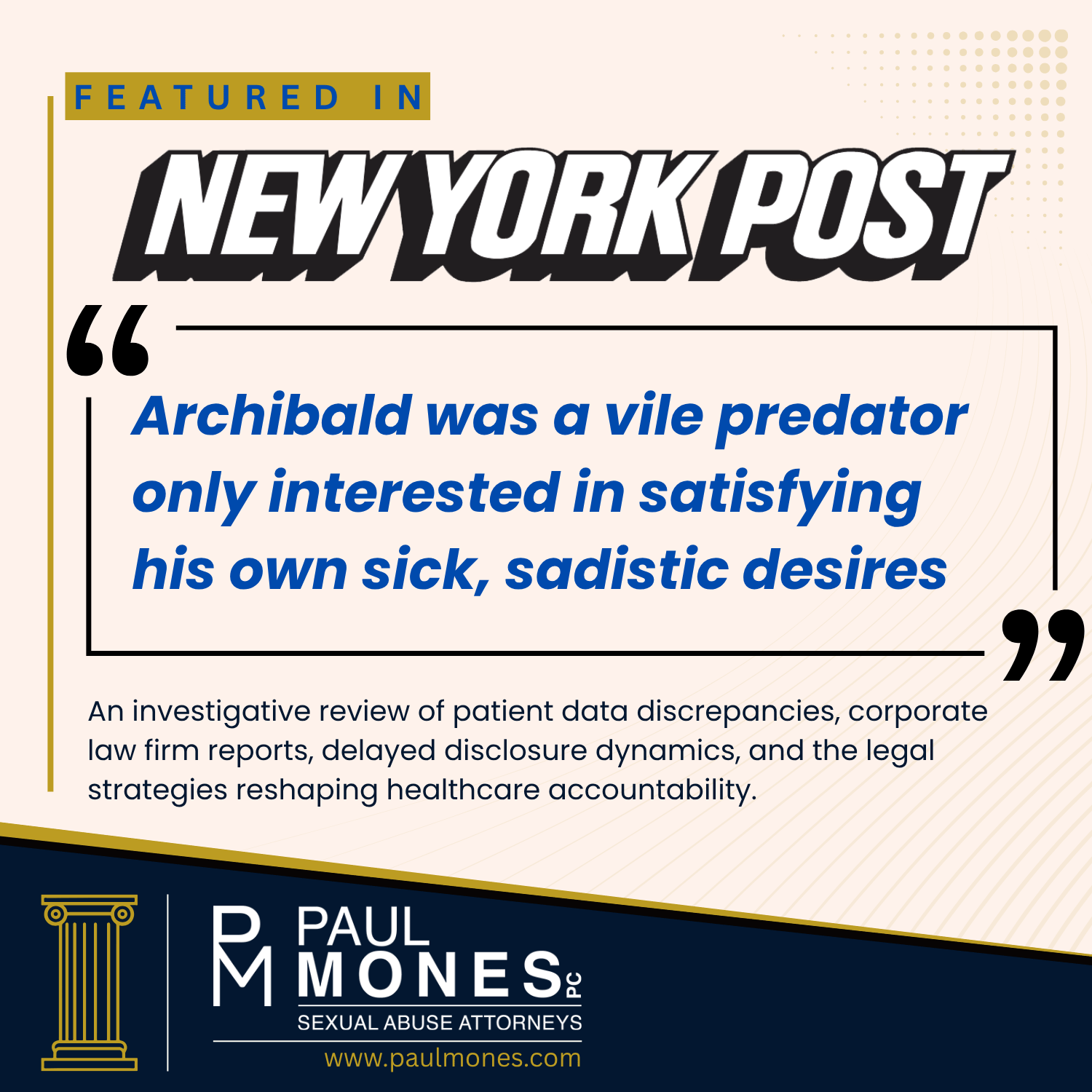
In the landscape of modern personal injury law, few chapters match the sheer volume and institutional failure uncovered at Manhattan’s historic Rockefeller University Hospital. For nearly four decades, from 1948 to 1982, Dr. Reginald Archibald operated as a globally respected pediatric endocrinologist specializing in child growth disorders. Behind the pristine facade of clinical research, however, hid a prolific serial predator. Today, the ongoing fallout from his decades of misconduct serves as a landmark case study in medical institutional abuse litigation, illustrating the immense challenges survivors face when confronting elite medical establishments that protect their reputations at the expense of vulnerable children.
When institutions publish internal investigative findings, they often frame them as a definitive accounting of historical events. However, trial attorneys and independent advocacy groups argue that these self-commissioned reviews regularly downplay systemic failures. In the arena of medical institutional abuse litigation, uncovering the true scope of a predator’s reach requires forcing the disclosure of primary source materials that organizations try to keep hidden behind corporate confidentiality walls.
The Paper Trail: Index Cards and Data Discrepancies
The true scale of the crisis at Rockefeller University Hospital emerged during a historic public briefing at Midtown Manhattan’s Omni Berkshire Place Hotel. There, specialized trial counsel Mariann Wang and Paul Mones exposed a massive gap between the hospital’s public statements and the actual internal records left behind by the predator.
The university had previously commissioned an independent investigation by a prominent corporate law firm, which sent outreach notices to just over 1,000 former patients they managed to locate. While the official report highlighted that 900 individuals stepped forward to confirm improper conduct, plaintiffs’ counsel revealed that this initial outreach barely scraped the surface of the underlying data.
Through aggressive legal discovery, it was revealed that Dr. Archibald maintained a private, highly organized filing system consisting of more than 9,000 individual index cards documenting his young patients. This massive discrepancy completely transformed the landscape of the medical institutional abuse litigation surrounding the facility. It made it clear that thousands of children crossed the threshold of his examination room over forty years, with a total victim count likely well in excess of 1,000.
Anatomy of a Cover-Up: Challenging Clinical Sugarcoating
A major tactical hurdle in medical institutional abuse litigation is overcoming the strategic terminology used by corporate defense teams to minimize severe trauma. In the Archibald proceedings, plaintiffs’ attorneys explicitly criticized the official hospital report for summarizing decades of horrific physical exploitation in a dry, detached manner.
This corporate defense strategy usually follows a predictable pattern:
- The “Legitimate Doctor” Framework: Presenting the perpetrator as an exceptionally talented, highly credentialed scientist who occasionally stepped across ethical boundaries, rather than a predatory actor utilizing a professional medical license to access vulnerable children.
- The Missing Records Shield: Claiming that older medical charts, sign-in sheets, and administrative files from specific decades are lost or destroyed due to standard retention policies, making it incredibly difficult for aging survivors to establish concrete timelines.
- The Isolation Strategy: Treating individual complaints as isolated, anomalous incidents to protect high-ranking administrators and board members from broad claims of negligent supervision and systemic cover-ups.
By intentionally refuting this corporate narrative, trial specialists have established vital precedents for modern medical institutional abuse litigation. Attorneys now routinely employ forensic historians and expert psychologists to prove that clinical settings are frequently weaponized by serial offenders to secure absolute compliance from pediatric patients.
Historical Timeline of the Reckoning
To appreciate how long it took for these hidden details to reach the public domain, it helps to examine the chronology of the events, beginning with the doctor’s decades of clinical practice and ending with modern civil complaints.
From 1948 to 1982, Dr. Reginald Archibald operated his pediatric endocrinology clinic at Rockefeller University Hospital, while also serving as the “pool doctor” for the Madison Square Boys Club. This era of clinical exploitation allowed him to build a massive repository of patient tracking information without triggering internal oversight.
In 2007, Archibald passed away without ever facing criminal charges or formal professional decertification. He left behind a private archive of 9,000 patient index cards that remained hidden from the public for over a decade following his death.
By 2018, inundated by an escalating volume of historical complaints, the university retained an outside corporate law firm to execute a controlled outreach campaign. This process targeted only a limited segment of former patients whom the hospital could actively locate.
In 2019, survivors stood alongside civil litigators to hold a historic press conference in Midtown Manhattan. They publicly rejected the hospital’s clinical summary and exposed the true scale of the index card archive to national news outlets.
Delayed Disclosure and the Weaponization of Science
The psychological core of medical institutional abuse litigation centers on the phenomenon of delayed disclosure. Statistical records indicate that survivors of pediatric medical exploitation routinely wait forty to fifty years before speaking openly about their trauma.
In clinical abuse cases, this delay is further extended by the systematic abuse of professional authority. As detailed by historical claimants, young children were repeatedly told that highly inappropriate physical examinations were standard “scientific procedures” required to monitor their growth disorders. Because patients trusted the sterile clinical environment, many spent decades wondering if they were the only ones who experienced the behavior, assuming that a world-renowned research hospital would never allow a predator to operate out of its main examination rooms.
The Legal Remaking of Healthcare Responsibility
The fallout from the Archibald discovery continues to influence how modern health networks, private clinics, and university medical centers handle risk assessment. Historically, healthcare organizations could count on strict statutes of limitations to insulate them from historical liability. However, the rise of modern legislative lookback windows, combined with a surge in medical institutional abuse litigation, has permanently stripped away those structural protections.
Today, plaintiffs’ firms are successfully arguing that institutions exhibit ongoing negligence when they hide behind historical summaries while withholding extensive private archives from the public. This legal pressure forces modern healthcare groups to adopt transparent auditing measures, ensuring that historical records are preserved and made fully accessible to independent investigators.
Secure Specialized Representation to Evaluate Your Case
The revelations surrounding historic clinical exploitation highlight why survivors need dedicated, aggressive legal advocacy to break through corporate stonewalling. If you or someone you care about needs to evaluate a historical claim involving a trusted medical provider, a regional healthcare network, or an educational clinic under the evolving framework of medical institutional abuse litigation, securing experienced counsel is a critical first step. Our legal group remains completely committed to challenging corporate cover-ups, auditing private institutional files, and securing the comprehensive resolution you deserve.
For more information about medical institutional abuse litigation, Contact Paul Mones, PC today to schedule a completely confidential, free case evaluation.
Source Information
To review the primary investigative reporting, analyze the original filing metrics, and read the complete journalistic breakdown surrounding this national legal wave, look at the comprehensive report published by the Associated Press via WBUR here.