The Unprecedented Reckoning: How 90,000 Claims Rewrote the Rules for the Boy Scouts Chapter 11 Bankruptcy Compensation Fund
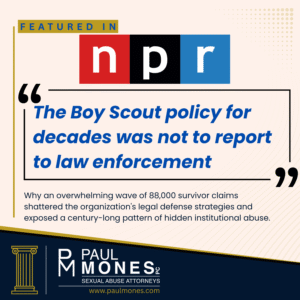
When historical institutions seek federal insolvency protection, executive leadership usually attempts to frame the process as a calculated financial correction. However, when the final filing deadline arrived for the Boy Scouts of America (BSA), the sheer magnitude of human trauma completely shattered the standard corporate playbook. Close to 90,000 sexual abuse claims flooded the federal court docket, shifting the focus from a standard operational restructuring to the creation of the largest, most complex Boy Scouts Chapter 11 bankruptcy compensation fund in global legal history.
The staggering volume of filings completely caught the organization’s legal teams and financial advisers by surprise. Initially entering the courthouse to address a few hundred active lawsuits, the administration suddenly found itself answering to a survivor pool that eclipsed the total number of claims filed against the Catholic Church across the entire United States. This historic development turned the Boy Scouts Chapter 11 bankruptcy compensation fund into a high-stakes battleground over institutional accountability, asset liquidation, and the moral obligations of a federally chartered institution.
The Nationwide Notification Campaign Backfires on Corporate Strategy
The massive surge in claims was accelerated by an aggressive, court-supervised outreach strategy. Under the direction of a federal bankruptcy judge, the national office launched a multi-million-dollar, nationwide advertising campaign to notify historical victims of their final opportunity to seek restitution. While the organization publicly claimed that it intentionally developed this open process to help survivors take an essential step toward healing, the resulting data exposed a generational epidemic of child exploitation that national executives had long sought to downplay.
The influx of claims doubled immediately following the launch of the public notices, completely shifting the balance of power within the courtroom and altering the financial scope of the Boy Scouts Chapter 11 bankruptcy compensation fund. For survivors who had carried the psychological burden of their abuse since the 1960s, 1970s, and 1980s, the creation of the Boy Scouts Chapter 11 bankruptcy compensation fund represented the first genuine mechanism to demand institutional transparency. However, as the deadline closed, the core operational question shifted from corporate apologies to financial reality: could the bankrupt organization actually fulfill its massive, compounding commitments to these tens of thousands of men through the Boy Scouts Chapter 11 bankruptcy compensation fund?
Verifying the Trauma: The Difficult Task Ahead
As the legal infrastructure transitions from logging grievances to designing the payout architecture, independent third-party advisers face an incredibly difficult verification process. Because the vast majority of these historical claims date back to eras before the implementation of modern background checks, mandatory abuse prevention training, and strict “two-deep” leadership rules, tracking down official corroborating documentation represents a major logistical obstacle for the Boy Scouts Chapter 11 bankruptcy compensation fund.
Pioneering trial attorney Paul Mones, who shattered the organization’s wall of secrecy in 2010 by securing a landmark $19.9 million verdict that forced the release of the hidden “perversion files,” warns that the path to equitable distribution will be long and highly adversarial.
Obstacles in the Trust Verification Process
- Vanished Historical Records: Many claims involve volunteer scoutmasters, religious sponsors, and temporary troop assistants whose names were never entered into official regional council registries or national rosters decades ago, complicating payouts from the Boy Scouts Chapter 11 bankruptcy compensation fund.
- Insurance Syndicate Warfare: Painstained legal forensic work lies ahead to identify which specific insurance carriers held active liability coverage for the national office and its hundreds of local branches during the exact decades the abuse occurred.
- Variable Valuation Metrics: Payouts from the Boy Scouts Chapter 11 bankruptcy compensation fund are expected to fluctuate dramatically based on the severity, duration, and long-term psychological impact of the documented abuse.
The Local Council Property Empire: A Disputed Cash Pool
The most contentious battleground in the entire restructuring process centers on who will actually provide the liquid capital to back the Boy Scouts Chapter 11 bankruptcy compensation fund. While the national council estimated its corporate investments, liquid capital, and real estate assets at roughly $1 billion in its initial filings, that sum represents only a fraction of the total wealth tied to the scouting brand.
The organization’s roughly 260 local councils hold massive, independent portfolios consisting of pristine wilderness camps, commercial real estate, and significant endowment funds. Throughout the execution of the bankruptcy, the national council has aggressively argued that these local branches are entirely separate legal corporations and should be completely shielded from the debtor pool, removing them from the direct reach of the Boy Scouts Chapter 11 bankruptcy compensation fund.
The Multi-Tiered Battle for Trust Capitalization
- The Separate Entity Defense: Local councils have organized ad hoc committees to negotiate separate, minimized contributions to the global trust, attempting to insulate their billions in land holdings from the bankruptcy courts and the Boy Scouts Chapter 11 bankruptcy compensation fund.
- The Statute of Limitations Threat: While the national deadline prevents any new filings against the main corporate entity, survivor attorneys are actively filing fresh lawsuits against local councils in states with progressive civil window laws, including New York, New Jersey, and California, creating liabilities outside the main Boy Scouts Chapter 11 bankruptcy compensation fund.
- The Insurer Refusal: Major insurance syndicates are fighting corporate demands for coverage, claiming that executive leadership’s historical failure to report known predators to law enforcement nullifies their policy protections, threatening the liquidity of the Boy Scouts Chapter 11 bankruptcy compensation fund.
Demanding Independent Accountability Over Corporate Restructuring
For the official Torts Claimants Committee—a group of nine chosen survivors representing the global interest of all victims—this case represents the most tragic bankruptcy ever recorded. They emphasize that because the scale of sexual abuse in scouting is entirely unprecedented, the financial remedies delivered by the final Boy Scouts Chapter 11 bankruptcy compensation fund must be equally unprecedented.
Survivors cannot afford to leave their recovery in the hands of corporate defense attorneys or internal administrative boards designed to protect an endowment. Navigating the complex architecture of the Boy Scouts Chapter 11 bankruptcy compensation fund, tracking down hidden local property networks, and fighting back against aggressive insurance denials requires an uncompromised, battle-tested legal advocate who answers solely to the victims.
Tearing Down the Corporate Shield to Demand Your Rightful Restitution
If you or a loved one suffered childhood sexual abuse within the scouting system, you should not let corporate defense teams dictate the terms of your recovery or minimize your trauma. Our legal practice focuses on dismantling institutional firewalls, tracking hidden council properties, and ensuring that individual survivors receive maximum compensation. We are prepared to aggressively fight the insurance cartels to secure the profound accountability and financial recovery you are rightfully owed through the Boy Scouts Chapter 11 bankruptcy compensation fund.
Contact Paul Mones, PC today to schedule a completely confidential, compassionate, and free case consultation.
Source Information
To examine the original Associated Press wire reports, breaking legal metrics, and official historical declarations from the Torts Claimants Committee regarding this historic insolvency milestone, read the comprehensive report published by the Associated Press here.